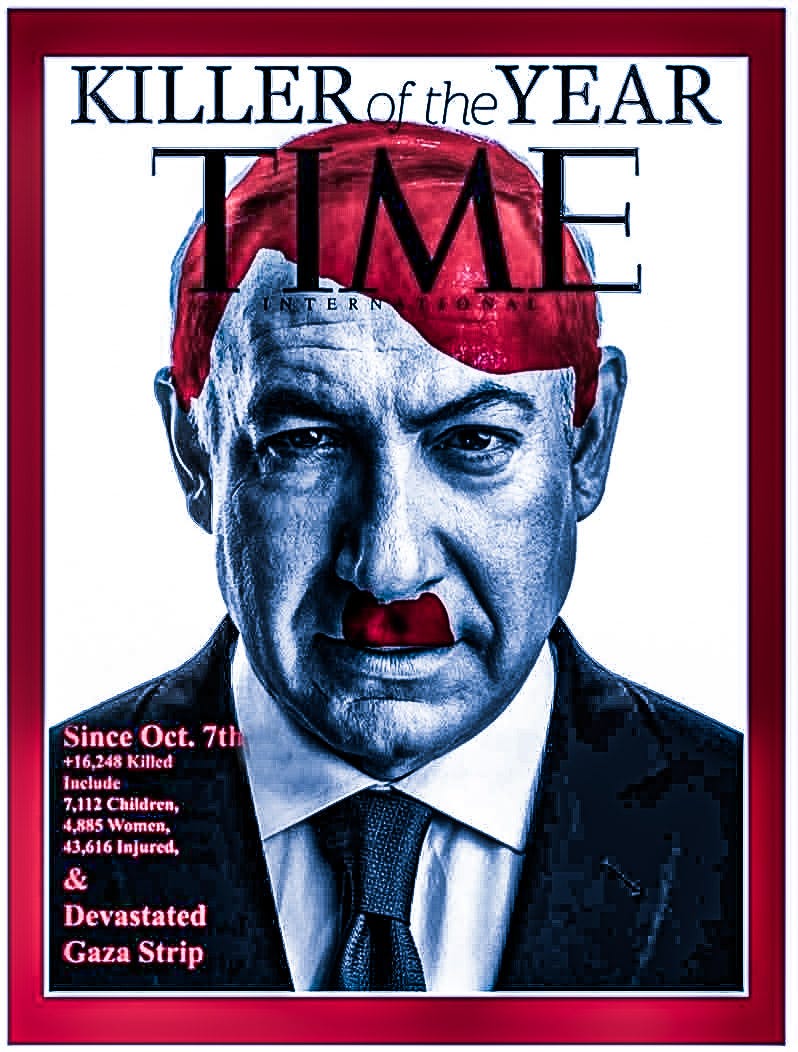
Oy Fucking Vey
How TikTok’s idiot compliance savant mistakes vocabulary control for moral clarity and is managing to fuck all Jews everywhere, flatten language, and make Israel look worse.

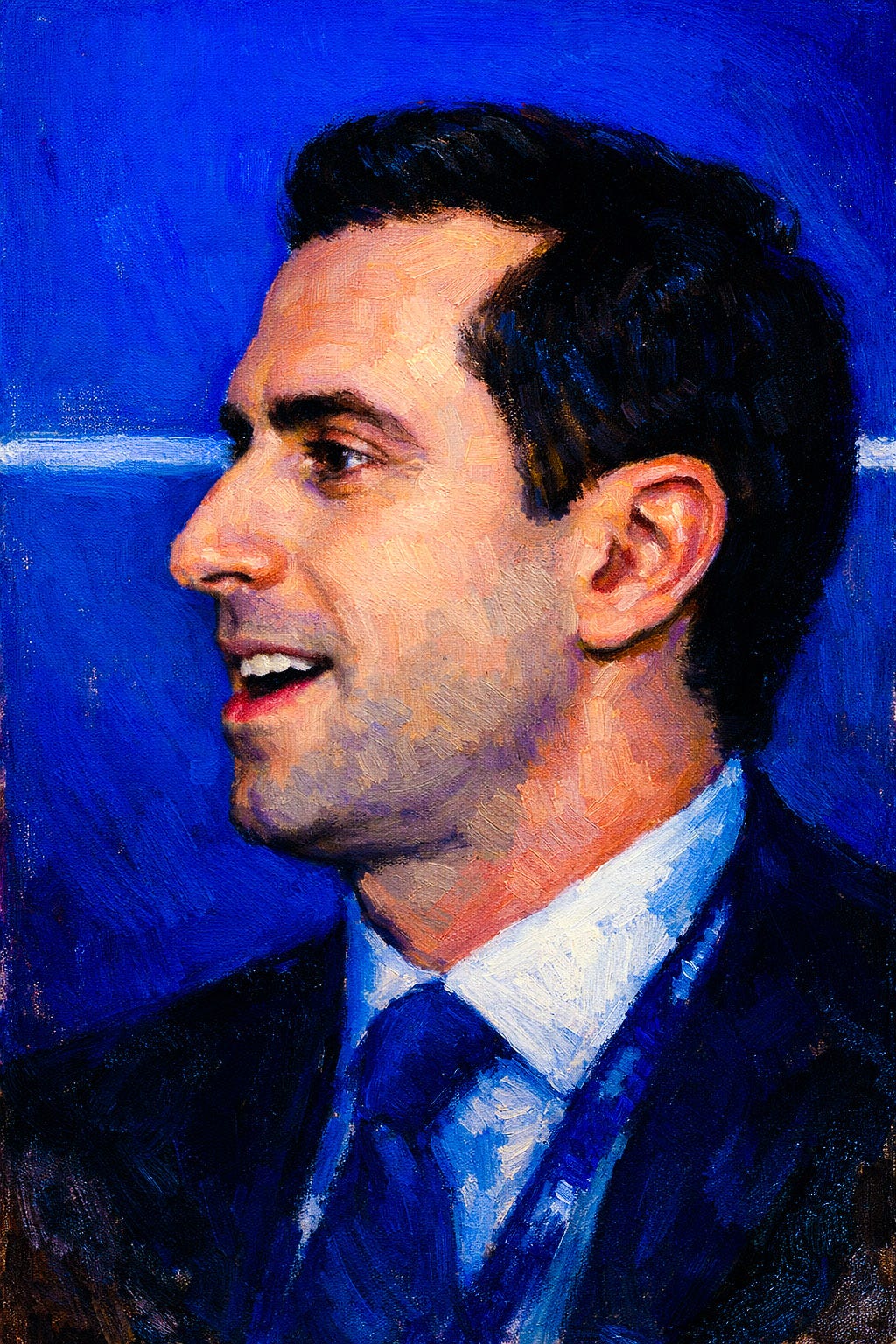
Big honking Jew-nose kike* Adam Presser—and we use those adjectives satirically, somewhat awkwardly, and as an ancient form of shocked respect for sheer audacity—the fresh new TikTok CEO, has proudly announced that, following Anti-Defamation League guidelines, criticizing someone as a “Zionist” on TikTok is now being treated as hate speech.
But Presser took his boasting even further, openly bragging that the platform has recently tripled the number of banned words and dramatically expanded censorship. He explains there is “no finish line” to this “moderation,” confirming that TikTok's speech policing will “not slow down.”
Think of it as a spiffily polished, Israel-made jackboot pressing endlessly on the neck of American public discourse. Or a different version of the censorship and propaganda conditioning Zionist slut Bari Weiss is now imposing on CBS News. (Both Weiss and Presser ultimately work for greasy-faced Zionist billionaire asshole and American traitor Larry Ellison’s growing U.S. media empire.)
The ADL, In declaring “Zionist” a hate term, has gone way too far simply because the word is frequently abused. And because the venerable American-founded organization has shifted from a civil-liberties-adjacent watchdog to a risk-management tool for Israeli fascist murderers.
Of course, by the time Presser told the world there is now “no finish line” for TikTok censorship, he had already crossed it. In the sane world of public discourse, his announcement was meant to, uh, maybe reassure? However, it landed as a grotesque fascist confession. Presser delivered his endless censorship policy with the calm of some mindless dickwad explaining that the fire exit has been relocated to a different dimension. Alongside it came proud statistics: banned words have multiplied; censorship has expanded; the machinery is working wonderfully well!
This is what responsibility looks like now: not a principle, but a process. Not an argument, but a list.
Presser’s résumé explains his massive social and intellectual retardation better than an unfortunate result of tribal inbreeding. He’s not a founder or a product mystic. He’s a fixer. He’s spent a career navigating the narrow hallways where corporations fuck around with power, where “trust and safety” is less an ethic than a routing protocol. The job is to keep the system alive, the regulators (in this case Zionist mass-murderers and the traitorous American billionaires who support them) calm, and the language pliable. Apparently, you don’t stop controversy; you merely render it administratively expensive.
The trouble with this particular word—“Zionist”—is that it names a very specific ideology.
And ideologies, being inconveniently specific, are useful to critics. So, the platform has decided to make the word dangerous. Not forbidden, exactly. Just risky. A speed bump. A shadow on the road. The user learns the lesson quickly: choose a safer synonym or accept the penalty.
What this misguided policy accomplishes first is a feat of theological illiteracy: There are Jews who oppose Zionism on religious grounds and have done so long before TikTok discovered vowels. The Neturei Karta reject establishing a Jewish state before the coming—or so they believe—messianic era. Likewise the Satmar Hasidim. Their objections aren’t rhetorical flourishes; they’re doctrine. Under Presser’s regime these fine, upstanding Jews are invited to enjoy the benefits of being protected from themselves. (You’ll find Hasidic and Orthodox Jewish presence on TikTok, ranging from lifestyle content to religious education, even as some in those communities grapple with the platform’s broader culture and moderation issues.)
In the name of shielding Jews, the platform has managed to erase Jewish dissent. It has collapsed an ancient, cherished religion into a modern nation-state that is currently pure evil incarnate and then declared the resulting bundle too delicate to discuss with precision. Safety, in this formulation, means never having to distinguish.
If the flesh were magically removed from this face of idiotic corporate policy, we would see Orwellian totalitarianism in its rawest form. It’s as if 1984 was Presser’s instruction manual.
Language, however, is stubborn. When you ban a word, you don’t ban the thought. You merely change its wardrobe. “Zionist” disappears; “Israel,” “Israeli government,” and “Israeli supporters” step forward, broader and blunter. The criticism doesn’t shrink; it spreads. Nuance exits. Generalization enters. The policy meant to narrow the target widens it. (If you don’t believe that and you want to test Presser’s unstated thesis, just substitute the word “Jew” for every mention of “Zionist” in this screed.)
This is the policy’s most elegant boomerang. By criminalizing an ideological label, TikTok trains its global audience to aim at every single one of the people associated with the pipsqueak “nation” of Israel, however tenuously. (And for the record, Israel is more like a bloated Phoenix, Arizona.) The result is not less anger but more ambient hostility, diffused across millions of young users who are very good at pattern-making and very bad at appreciating footnotes.
Presser calls this progress. He calls it ongoing. He calls it endless. The phrase “no finish line” is supposed to sound vigilant. It sounds instead like a promise to keep moving the goalposts until language gives up and simply fucks itself to death.
The banality of the thing is almost soothing. No speeches. No uniforms. Just a well-lit office where a fresh, young smiling Zionist chief of staff cheerfully explains that “moderation” is a forever project and words are raw material to be milled. The platform remains open; the square is public; the rules are dynamic; the penalties are quiet. Everyone is free to speak—provided they learn the new Ellison-approved dialect.
If this is protection, it’s the padded-room variety: calm, controlled, and allergic to reality. It flatters power, confuses identity, and punishes specificity. It doesn’t defend Jews. It certainly doesn’t clarify Israel. It doesn’t reduce hate. It manufactures confusion and calls it care.
Which leaves us with the utter tragedy at the center of that “endless” finish line. A policy designed to sanitize a platform for the protection of a political cabal bent on completing its horrific genocide ends up degrading the very language people need to argue rationally about the world and the future of an ancient religion. But then Zionists, who emerged in their modern form in late 19th-century Britain and who are ultimately crafty colonialists—meaning rapacious capitalists and exploiters, just like the Brits and Americans—have always hidden behind their religion. Um, just like the Brits and Americans.
TikTok will survive—sort of. But its spirit of free and open discussion, weak to begin with, certainly will not.
And Jesus H. Fucking Christ on a pogo stick—it doesn’t help that TikTok has hired former Israeli military intelligence Unit 8200 (signals intelligence) personnel—who are now concentrated in the app’s trust, safety, marketing, and client solutions departments. Unit 8200 is linked to sinister surveillance tools, especially Pegasus spyware, which has been used to monitor tens of thousands of journalists, politicians, activists, and business leaders worldwide. Oh, and they’ve updated their terms of service, which now allow for collection of extremely broad personal data, including medical information.
Translation: same panopticon, new management, sharper knives.
*Kike—Origin: likely from early-20th-century U.S. slang, often explained as coming from a misspelling of “kyke”—itself tied to Yiddish speakers signing documents with a circle instead of an “X”—though etymology is debated. Usage: historically used to demean, exclude, or incite hostility against Jews. Today it’s recognized as hate speech; using it casually or as an insult is widely condemned.
Sidebar
A Very Old Complaint
Long before content moderation teams and banned-word spreadsheets, the Roman world had its own explanation for why Jews were “difficult.” The charge sheet was remarkably consistent—and eerily durable.
Tacitus, writing in the first century, complained that Jewish customs were “opposed to all other religions” and accused Jews of contempt for outsiders, loyalty only to their own, and a refusal to honor the civic rituals that held the empire together. What Romans prized—public sacrifice, shared gods, symbolic obedience—Judaism rejected outright.
Juvenal turned the irritation into mockery, sneering that Jews taught their children to despise Roman gods and to follow laws meant to keep them separate. In satire, social resentment leaks out unfiltered.
Cicero, defending a governor accused of stealing Temple funds, grumbled about Jewish solidarity itself—the alarming way Jews acted together, mobilized quickly, and refused to dissolve into polite Roman individualism.
Seneca the Younger (as quoted by later scholars) worried that Jewish customs had spread so widely that “the conquered have given laws to the conquerors”—a neat summary of imperial anxiety about cultural resilience without military power.
Greek polemicists like Apion went further, accusing Jews of hating foreigners and believing themselves superior to everyone else—charges preserved and rebutted by Josephus, but telling all the same.
The pattern—which the ancients generalized as “misanthropy”—is unmistakable. Jews were accused of separatism, arrogance, obstinacy, and disloyalty—not because they rebelled constantly, but because they purported to obey a law that didn’t come from the Roman state or Greco-Roman culture. This was not modern racial antisemitism; Romans allowed conversion and sometimes admired Jewish antiquity—they must have, because their highly educated Greek writers based Christianity on ancient Hebrew foundations. But theirs was still a political and cultural hostility—directed at a small community that refused to let empire define its highest loyalty.
Two thousand years later, the vocabulary has changed, the platforms are digital, and the rhetoric is managerial in a chillingly fascist style. The complaint, however, remains stubbornly familiar.
Empires fall when they mistake control for legitimacy. Platforms fail when they confuse vocabulary management with trust. Under Adam Presser and his asshole billionaire Zionist boss Larry Ellison, TikTok is betting that endless “moderation”—no finish line, ever—can substitute for moral clarity, historical literacy, and a tolerance for uncomfortable precision. It can’t.
The more words are made radioactive, the blunter the speech becomes; the more ideology is suppressed, the more resentment diffuses; the more rules expand, the faster users learn to route around them—or leave. Platforms don’t die because people talk too freely. They die because the conversation becomes too costly and/or annoying to have. When every sentence is a compliance gamble, the square empties. What remains is a well-lit room, perfectly safe, humming quietly while the crowd moves on.